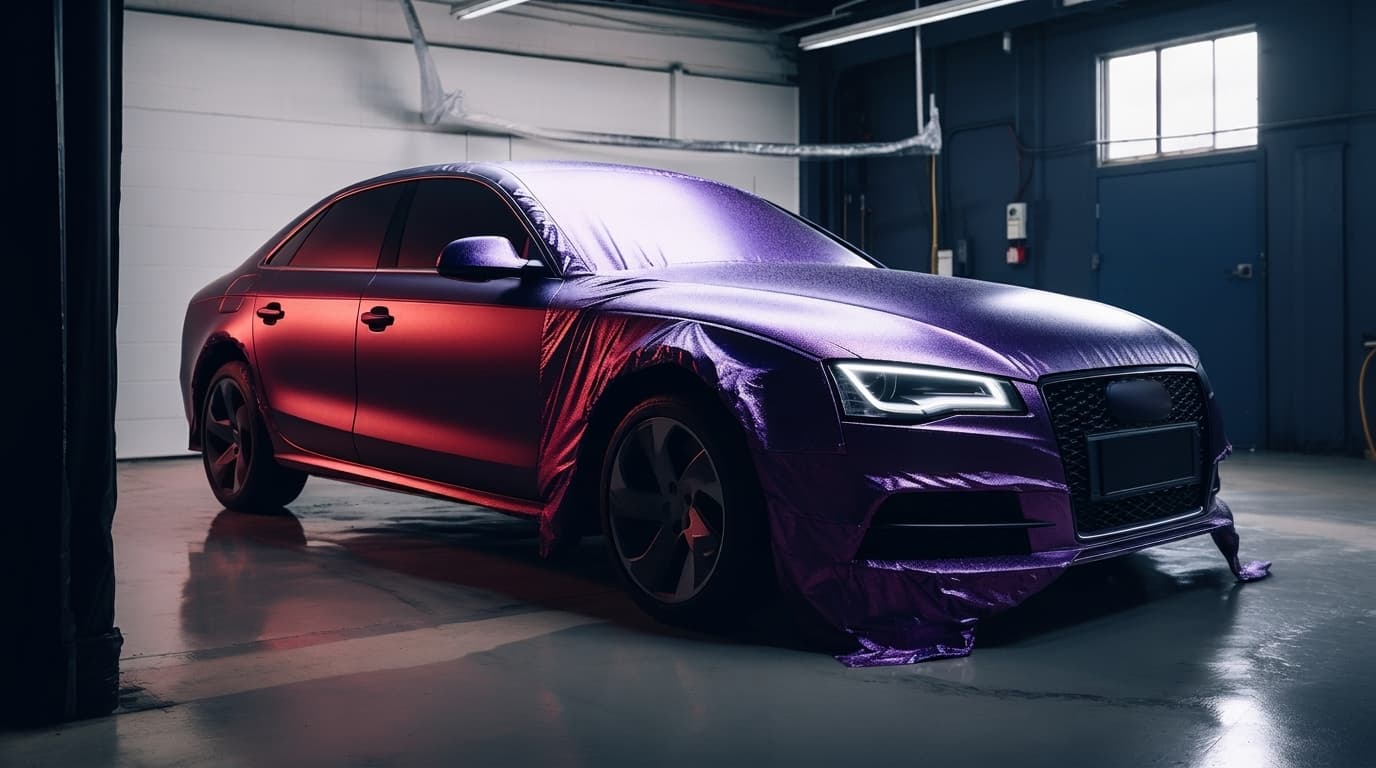
How to Safely Remove Your Vehicle Wrap Without Damaging Your Ride
How to remove a vehicle wrap without damaging your paint: heat range, peel angle, adhesive removal, and realistic timings. Plus when an old wrap needs a professional and why wrapping over an existing wrap never works.
The short answer
Yes, a vehicle wrap can be removed, and on factory paint in good condition it comes off without damage. The whole job is heat, angle and patience: warm the vinyl to roughly 100–140°F, peel at a shallow angle rather than straight out, and take the adhesive off afterwards with a proper vinyl adhesive remover. Expect 4 to 8 hours for a full car if you are doing it yourself, and longer if the wrap is old, sun-baked or was applied over a repaint.
Before you start: will removal damage your paint?
On healthy factory paint, no — that is the entire point of a quality cast vinyl. The wrap protects the paint underneath and comes away cleanly. Paint comes off in three situations, and all of them are pre-existing:
- Aftermarket respray. Wrap adhesive frequently bonds better to a repaint than the repaint bonds to the panel. If any part of the vehicle has been resprayed, assume risk and go slowly.
- Existing rust, chips or lifting clearcoat. The vinyl will lift whatever was already failing.
- A wrap left on far too long. Most cast wrap films are rated around 5 to 7 years. Past that the vinyl gets brittle, the adhesive cures hard, and it comes off in small stubborn flakes instead of sheets.
What you need
- Heat gun — a hair dryer works but will roughly double your time. A heat gun with variable temperature is worth borrowing.
- Plastic razor or scraper — never metal, on any painted surface.
- Adhesive remover rated for automotive paint — a citrus-based or purpose-made vinyl remover. Check the label says it is clearcoat-safe.
- Microfibre towels, a bucket of car shampoo, and gloves.
- An infrared thermometer if you have one. It removes all the guesswork about whether you are hot enough or too hot.
How to remove a car wrap, step by step
1. Work somewhere shaded and above 60°F
Direct sun makes the panel temperature impossible to control and bakes the adhesive as you work. A cold garage is equally bad — below about 60°F the vinyl turns brittle and tears into confetti. A shaded driveway on a mild day is ideal.
2. Wash the vehicle first
Grit dragged under a scraper is how paint gets scratched during a removal that would otherwise have been clean. Wash and dry before you touch it with a tool.
3. Heat one panel at a time to about 100–140°F
Keep the gun moving in a back-and-forth sweep 6 to 8 inches from the surface. You are softening the adhesive, not melting the film. If the vinyl goes glossy, distorts, or smells, you are too hot — back off. Heat one panel, strip it, then move on; heating the whole car at once just means it cools before you get there.
4. Lift an edge and pull at a shallow angle
Start at a corner or seam with the plastic razor. Once you have a tab, pull it back on itself at roughly 45 degrees or shallower, slowly and steadily. Pulling straight out at 90 degrees stretches the vinyl and snaps it, leaving adhesive behind and doubling the work. Slow and shallow removes adhesive with the film; fast and steep leaves it on the paint.
5. Re-heat anything that fights you
If the film tears repeatedly or leaves a grey adhesive haze, it is not hot enough. Stop pulling and add heat rather than force — force is what marks paint.
6. Take off the adhesive residue
Some residue is normal, especially on older wraps. Spray the remover, let it dwell the time the label states, then wipe with a clean microfibre in one direction. Repeat rather than scrubbing. Scrubbing dry adhesive is abrasive.
7. Wash, then inspect in daylight
Wash off the remover thoroughly — most leave an oily film that will interfere with wax, sealant or a new wrap. Then look at the panels in daylight for haze or missed adhesive. It is far easier to fix now than after you have applied something new.
How long does it take?
| Vehicle | DIY, heat gun | Professional |
|---|---|---|
| Partial wrap or decals | 1–3 hours | Under an hour |
| Sedan, full wrap | 4–6 hours | 2–4 hours |
| Van or box truck | 8–12 hours | 4–6 hours |
| Wrap over 7 years old | Double the above | Significantly longer |
When to stop and call a professional
- The vehicle has been resprayed anywhere, and you do not know how well.
- The wrap is well past its rated life and coming off in flakes rather than strips.
- It is a lease return — paint damage found later costs more than the removal would have.
- You are re-wrapping anyway. Removal and prep are most of the labour in a re-wrap, and doing it badly shows through the new film.
Frequently asked questions
Can you unwrap a car?
Yes. Vinyl wrap is designed to be removable — that is one of its main advantages over paint. Within its rated life it peels off cleanly with heat and leaves the original finish underneath.
Can I remove a wrap without a heat gun?
It is possible with a hair dryer or on a genuinely hot day, but it takes far longer and tears more, which leaves more adhesive to clean up. The heat gun is the difference between an afternoon and a weekend.
Will removing the wrap take my clearcoat off?
Not on sound factory paint. If clearcoat lifts, it was already failing — wrap adhesive finds existing weakness rather than creating it.
Does old wrap come off differently?
Yes, and this is the single biggest variable. Past roughly 5 to 7 years, the plasticisers migrate out, the film goes brittle, and it stops peeling in sheets. Removing a wrap on schedule is much cheaper than removing one that is years overdue.
Can I wrap over an existing wrap?
No. The new film has nothing stable to key to, seams and edges telegraph through, and you inherit every flaw underneath. Remove first.
If you would rather not do it yourself
Notatek wraps and re-wraps vehicles at our shop in American Fork, Utah — fleets, box trucks and single vehicles — and taking an old wrap off cleanly is the first half of every re-wrap we do. If you are removing one to put something new on, it is usually worth having both done together. See our vehicle wrap work or tell us what you are driving.