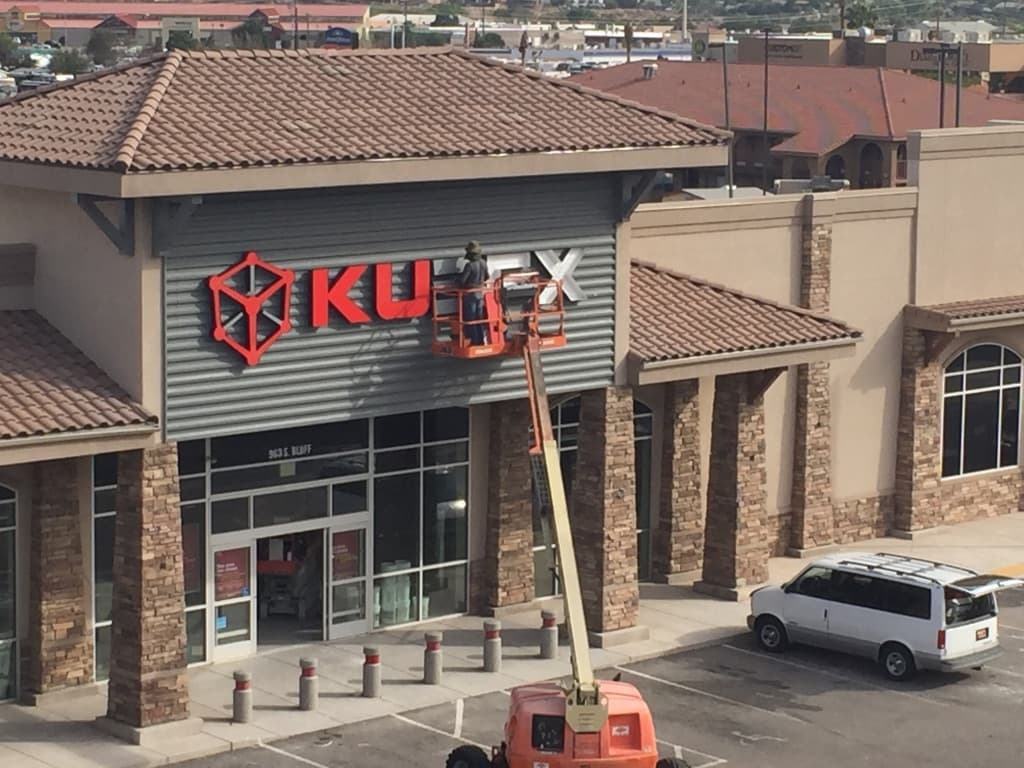
Permits, letter size, night visibility, LED and UL listing, power and installation: the do’s and don’ts we walk every Utah business through before an electric sign gets built.
An electric sign is usually the biggest single piece of marketing a storefront business ever buys. It works every night for ten years or more, and it is the first thing a new customer sees. It is also easy to get wrong in ways that cost real money: a permit that gets rejected, letters too small to read from the road, or a sign that looks great at noon and disappears after dark.
We have been designing, building and installing signs for Utah businesses since 2009. These are the do's and don'ts we walk every client through before anything gets built.
Do: start with the rules, not the artwork
Almost every Utah city requires a permit for an exterior illuminated sign, and each one has its own sign code. Size limits, lighting limits and where a sign may go all change from city to city, and often by zone within a city. If you lease your space, there is usually a second set of rules too. Most shopping centers have a tenant sign criteria document that controls letter height, colors, illumination and mounting.
- Ask your landlord or property manager for the sign criteria before you design anything.
- Find out how much sign area your frontage allows. Many codes tie it to the width of your storefront.
- Expect the permit to take time. Most electric sign projects run about 4 to 8 weeks from approved design to install, and permitting is a big part of that.
Don't: order a sign before the permit is approved
A sign built before approval is a gamble. If the city or the landlord asks for a smaller size, different lighting or a new mounting location, you may be paying to rebuild it. Get the drawings approved, then fabricate.
Do: size the letters for the distance people actually see them from
A sign that looks huge on your laptop can be unreadable from a moving car. A common sign-industry rule of thumb is about one inch of letter height for every 10 feet of viewing distance if you want it read at a glance. Think about where your customers really are when they first see you: across a parking lot, across a four-lane road, or right at the door.
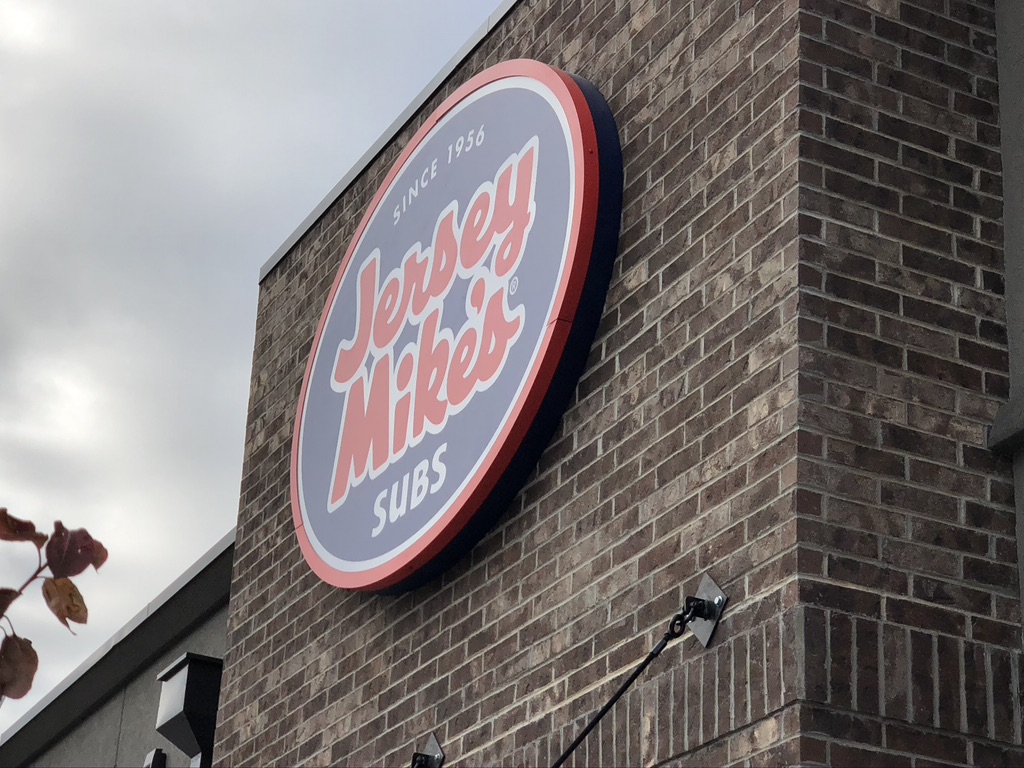
One strong shape, high contrast and very few words. It reads from the road in a second.
Don't: put your whole business card on the sign
Phone numbers, websites, taglines and a list of services all compete with your name. People driving by get two or three seconds. Lead with the name and logo, and add one short descriptor only if your name doesn't explain what you do. Save the details for window graphics or a door decal, where people are standing still.
Do: design for night first
Your sign does most of its work in the dark: winter evenings, early mornings, and the hours when people are driving home. Ask for a night rendering, not just a daytime mockup. Then choose a lighting style that suits your brand:
- Face-lit channel letters glow through a colored acrylic face. They are the brightest and easiest to read from a distance.
- Halo-lit (reverse) letters light the wall behind them for a soft outline. They look upscale up close but read less strongly from far away.
- Illuminated cabinets light a whole panel. They are cost-effective, especially for complex logos or multi-tenant pylon panels.
Don't: assume your logo works in lights as-is
Thin script, tiny taglines and fine details can blur together once they are lit. Gradients and photographic effects often can't be built in light at all. A good sign designer will simplify the logo just enough to read clearly while still looking like your brand. Ask to see the simplified version before approving.
Do: choose LED, and insist on UL listing
LED is the standard for new signs. It uses far less power than neon or fluorescent, runs cooler and lasts much longer. Quality LED sign modules are commonly rated for 50,000+ hours. The whole sign should be built to UL standards (UL 48 covers electric signs) and carry a UL label. Many inspectors look for it, and it is your assurance the wiring, power supplies and enclosures were built safely.
Don't: buy on the lowest bid alone
Two quotes for "the same" channel letters can differ a lot because of what's inside: LED module brand, power supply quality, the gauge of aluminum, how the faces are sealed. Cheap power supplies and bargain LEDs are the most common reasons a sign goes dim, flickers or has dead letters a few years in. Ask what components are used and what the warranty covers.
Do: plan the power before install day
An electric sign needs power where it mounts, usually a dedicated circuit run by a licensed electrician to a junction box behind the sign. The electrical code also requires a disconnect switch within sight of the sign. Sorting this out early avoids a second trip and a delayed opening. Add a photocell or timer so the sign turns on at dusk without anyone remembering to flip a switch.
Don't: DIY the install
Mounting a heavy, energized sign 15 feet up a building face takes the right lift, the right anchors for your wall type, and wiring that will pass inspection. A sign that isn't sealed and anchored correctly lets water into the wall and the letters. Hire a crew that installs signs every week.
Do: build for Utah weather
Utah signs face strong high-altitude sun, freeze-thaw cycles, wind and snow. UV-stable faces and paints keep colors from fading. Sealed, drained letter returns keep water and ice out. Mounting should account for snow sliding off the roofline above. Some Utah communities also have dark-sky lighting rules that limit brightness or lighting hours, so check before choosing your illumination.
Don't: forget maintenance
Even well-built signs collect dust, bugs and the occasional failed module. Look at your sign at night once a month. Fix a dark letter right away, because a sign reading "PIZ A" quietly tells people the business isn't paying attention.
A quick checklist before you sign off
- Landlord sign criteria in hand and city permit requirements understood
- Letter height checked against real viewing distance
- Name and logo first, with very few extra words
- Night rendering approved, not just a daytime mockup
- LED illumination, UL-listed, with a clear warranty
- Power, disconnect and photocell or timer planned with the electrician
- Professional install with the right anchors for your wall
What an electric sign costs
Every sign is different, but typical installed ranges help with budgeting. A storefront channel-letter set commonly runs about $2,000 to $8,000. Illuminated cabinet signs run about $1,500 to $5,000. Freestanding monument or pylon signs start around $5,000 and can go well past $25,000. We give a firm number after a quick look at your site.
If you are planning a lit sign anywhere in Utah, request a free electric sign quote. Every quote comes with a mockup. We design and build in-house, handle the permit drawings, and install with our own crews. You can also see more about our electric sign work.